
Seven years after Modi took office, merchandise exports were lower in 2020-2021 than when he had taken over from Manmohan Singh, points out Aakar Patel.
The country's exports rose by 23.69 per cent to $34.06 billion in January on healthy performance by engineering, petroleum and gems and jewellery segments even as trade deficit widened to $17.94 billion during the month, according to provisional data of the commerce ministry. Imports in January grew by 23.74 per cent to $52.01 billion, the data, released on Tuesday, showed. Trade deficit widened to $17.94 billion during the month as against $14.49 billion in the same month last year.

India's trade deficit with Russia continued to widen for the second consecutive year to $57 billion in the financial year 2023-24 (FY24), with Moscow becoming New Delhi's largest source of crude oil imports. All eyes will now be on Prime Minister Narendra Modi's visit to Russia during July 8-9, where he is set to meet President Vladimir Putin. This will be Modi's first visit to the Kremlin since the Russia-Ukraine conflict began over two years ago.
India's exports contracted by 22 per cent, the steepest decline in the last three years, to $32.97 billion in June on account of global demand slowdown, especially in the Western markets like the US and Europe. According to the data of the commerce ministry, the trade deficit in June stood at $20.3 billion against $22.07 billion in the same month last year due to a fall in exports and imports. The inbound shipments during the month under review declined by a steep 17.48 per cent to $53.10 billion.

Given that India will get a huge part of its oil supplies from Iran through its government-owned oil PSUs, any unwelcome shocks in global crude rates could be absorbed well enough.

Market reaction to the Union Budget was overall neutral. The income tax "gift" wasn't enough to move the needle. There was some apparent rationalisation of Customs duty structure as well as cuts on import duties of some key components for the telecom and IT industry and duty cuts on vehicle imports. Other proposals related to development of agriculture and rural economy and renewables seem to be generally positive.

Oil and LNG prices are likely to shoot up if Iran is to block Strait of Hormuz, through which countries like India import crude oil from Saudi Arabia, Iraq and UAE, leading to a spike in inflation, analysts said on the Iran-Israel conflict. The Iran and Israel conflict has escalated over the last few days. Iran first launched drone and rocket attacks on Israel, which retaliated by firing a missile. Crude oil prices have hovered around USD 90 per barrel since the conflict.

If growth reverts to the pre-Covid level, a lot of people may have to temper their rosy optimism, points out Debashis Basu.

Closely watched by the world for any escalation, the Iran-Israel conflict is already showing early signs of stress for India Inc - longer deliveries, doubling freight rates, extended working capital cycles, and higher costs. For those yet to feel the heat, there is growing apprehension and nervousness over future developments, observed industry executives.

'He needs to see results while he is in office.'

Ukraine is currently in the middle of a strategic offensive into Russia's Kursk region.

Investors are showing some interest in the downstream energy cycle. Refiners and marketers, especially the public sector (PSU) oil marketing companies (OMCs) could see a revival of marketing margins. Lower crude oil and gas prices may also improve margins in industries like paints, logistics, synthetic fabrics, plastics, and fertilisers. In the medium-term, however, there could be a supply overhang affecting OMCs as new refining capacities are scheduled to be commissioned, especially in China, and this may lead to a drop in the refining margins as capacity would be surplus to demand until and unless there's a pick-up in global growth.

Top government officials in New Delhi have started discussions with stakeholders ranging from shipping and container companies to export promotion councils to understand the impact of the Iran-Israel tensions and plan ahead. Inter-ministerial talks are also being lined up amid the crisis situation in West Asia, sources confirmed. While the crude flows are not directly under any threat, elevated oil prices remain a concern, according to officials.

Even as Russia and West Asia have been slugging it out for market share in India to sell their crude oil, the US is quietly making its moves on the sidelines. The US has doubled its share of the Indian crude market in the past few months, according to industry sources and ship-tracking data. Some of the increase in America's market share may have come at the expense of Russia, India's biggest crude oil supplier, said industry sources.

Oil has slumped from above $115 in June 2014 as shale oil from the United States has flooded the market

With hilsa prices soaring, when you do cook it you need the finest recipe.

India on Wednesday asserted that its energy purchases from Russia remain 'minuscule' in comparison to its total consumption and that legitimate energy transactions cannot be politicised as energy export from Russia are yet to be sanctioned. The world's third-biggest oil-consuming and importing nation has in recent weeks snapped few cargoes available from Russia at deep discounts as part of its plans to diversify its import basket. These purchases have been commented upon.

The most striking features of this Budget was its focus on simplification and improving the ease of doing business in India, asserts Kaku Nakhate.

India has secured approval of the United States Department of Agriculture (USDA) for the export of domestic mangoes to America in the new season, the commerce ministry said on Tuesday. The export of Indian mangoes has been restricted by the US since 2020 as the USDA inspectors were unable to visit India for inspection of irradiation facilities due to restrictions imposed on international travel because of the COVID-19 pandemic. On November 23, 2021, the Department of Agriculture and Farmers Welfare and the USDA signed a framework agreement for implementing the "2 Vs 2" agri-market access issues.
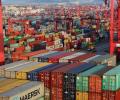
The country's exports jumped by 58.23 per cent to $34 billion in March as key sectors such as engineering, gems and jewellery and pharmaceuticals recorded healthy growth rate during the month, according to the Commerce Ministry's provisional data. Exports during April-March 2020-21, however, dipped by 7.4 per cent to $290.18 billion compared to $313.36 billion in 2019-20, the data showed. Imports during 2020-21 contracted by 18 per cent to $388.92 billion compared to $474.71 billion during 2019-20. In March 2020, the exports stood at $21.49 billion, which was a decline of about 34 per cent over March 2019 due to global slowdown induced by the Covid-19 crisis.

The United Arab Emirates (UAE) has agreed to look into India's concerns over compliance to rules related to the import of silver products, platinum alloy and dry dates, the commerce department said on Tuesday. During a joint committee meeting under the India-UAE trade deal, officials from New Delhi raised concerns over the recent surge in imports of these products. These were being shipped to India, taking advantage of the lower tariffs under the pact.
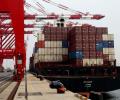
Economic recovery from the pandemic in the US has helped India achieve the $400-billion mark for exports for the first time in any fiscal year. According to the preliminary data compiled by the Department of Commerce, India exported goods worth $73 billion to the US from April 1 to March 21 - up 47 per cent, compared to last year. The US' share of exports, compared to total exports, stood at 18.2 per cent. The country is also India's largest trading partner and export destination.
Margins for the oil refining and retailing sector have moved off their peaks, and the average integrated margins (refining plus marketing) for oil marketing companies (OMCs) have normalised. The ascent in crude oil prices, combined with static retail prices, has depressed marketing margins for diesel and petrol. However, the fall in marketing margins has been offset by increased gross refining margins (GRMs).

The Organization of Petroleum Exporting Countries (OPEC) in its latest monthly oil market report projected the world's third-biggest energy consumer to add 0.39 million barrels per day (bpd) of crude oil demand in 2022. India's oil demand rose from 4.51 million barrels per day in 2020 to 4.76 million bpd in 2021, recording a 5.61 per cent growth.

A fall in crude oil price and Aramco's $75 billion annual dividend commitment may have delayed Saudi company picking a stake in Reliance Industries Ltd's oil-to-chemical unit (O2C), research firm Jefferies said. Richest Indian Mukesh Ambani had in August 2019 announced talks for the sale of a 20 per cent stake in the O2C business, which comprises its twin oil refineries at Jamnagar in Gujarat and petrochemical assets, to the world's largest oil exporter. The deal was to conclude by March 2020 but has been delayed for reasons not disclosed by either company.

ICICI Bank, Tata Motors, Tata Steel, NTPC, JSW Steel, State Bank of India and Adani Ports were the other big gainers. Asian Paints, Nestle, Tech Mahindra, HCL Technologies, Hindustan Unilever, Infosys and ITC were the other big laggards.

Secretary of State Mike Pompeo said that countries like India, if it gets the exemption, would be asked to bring down their oil imports from Iran to zero in six months' time.
Quarterly earnings of corporates, trading activity of foreign investors and inflation data are the key factors that are expected to drive the momentum in the equity markets this week, analysts said.
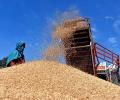
The Russia-Ukraine conflict would have nil or negligible impact on India's foreign trade, and the crisis may give domestic exporters an opportunity to ship more wheat in the global markets, sources said on Thursday. India's central pool stood at 24.2 million tonnes, twice more than the buffer and strategic needs, they said. More than a quarter of the world's wheat export comes from Russia and Ukraine.

After depreciating 0.32 per cent against the dollar in October so far, the rupee is expected to hold ground against the greenback in the current quarter on the back of robust inflows. According to the median of a Business Standard poll of 10 respondents, the rupee is seen trading around 84 per dollar till the end of December. "In India's case, at least the bond and cash related inflows will continue.

Just as very high oil prices looked an anomaly in a sluggish world, so now do record high equities.

India's merchandise exports rose by 22.63 per cent year-on-year to $33.79 billion in September on better performance by key sectors like engineering goods and petroleum products, according to official data released on Thursday.
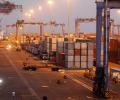
After recording positive growth for two months in a row, India's exports dipped marginally by 0.25 per cent to $27.67 billion in February and trade deficit widened to $12.88 billion, according to preliminary data released by the government on Tuesday. Imports grew 6.98 per cent to $40.55 billion during the month, the data showed. The trade deficit stood at $10.16 billion in February 2020. Exports during April-February 2020-21 were $255.92 billion, compared with $291.87 billion during the same period of last year, exhibiting a negative growth of 12.32 per cent.

With palm oil having 55 per cent share in total edible oil imports, the National Mission on Edible Oil-Oil Palm (NMEO-OP) would ensure that farmers get all facilities, from quality seeds to technology to promote cultivation of palm and other oil seeds, he said. Modi made this announcement after virtually releasing the ninth installment of Rs 19,500 crore to 9.75 crore beneficiary farmers under the government's flagship scheme PM-KISAN.
Exports rose by 24.22 per cent to a monthly record high of $38.19 billion in April on account of healthy performance by sectors like petroleum products, electronic goods and chemicals, even as trade deficit widened to $20 billion during the month, the commerce ministry said on Tuesday. Imports during the month under review grew by 26.55 per cent to $58.26 billion. The trade deficit in April 2021 was at $15.29 billion.

Prime Minister Narendra Modi met two Kuwaiti nationals who translated and published India's two iconic epics, Mahabharata and Ramayana in Arabic during his two-day visit to Kuwait. Modi, who praised their work, said it highlights the popularity of Indian culture globally. His visit to Kuwait is the first by an Indian prime minister in 43 years.

India has taken up the issue of high oil prices with producer nations and OPEC, demanding affordable rates, Minister of State for Petroleum and Natural Gas Rameswar Teli told the Lok Sabha on Monday. Petrol and diesel prices have shot up to record highs across the country after relentless price increases since early May. Petrol is retailing above Rs 100 a litre in more than a dozen states.

India has flagged concerns over non-tariff barriers (NTBs) faced by its exporters with the Russian government, commerce secretary Sunil Barthwal said on Monday. NTBs faced by Indian exporters are mainly in sectors such as marine products and pharmaceuticals.
The country's exports surged 49.85 per cent to $35.43 billion in July on account of healthy growth in petroleum, engineering, and gems and jewellery segments, even as the trade deficit widened to $10.97 billion during the month, official data showed on Friday. Imports during the month also rose by about 63 per cent to $46.40 billion, as per the data released by the commerce ministry.

Plenty of other factors are likely to keep a lid on prices.
